

How to Choose Shirt Size: A Complete Guide
Table of Contents
- Why Getting Your Shirt Size Right Matters
- How to Measure Chest for Shirt Size
- Measuring Sleeve Length and Neck Circumference
- How Should a T-Shirt Fit on Your Body
- Difference Between Unisex and Fitted Sizing
- Dress Shirt vs. T-Shirt Sizing: What You Need to Know
- Understanding Fit Types: Slim, Regular, and Relaxed
- Fabric Shrinkage and Size Adjustments
- Frequently Asked Questions
Last Updated: September 2, 2026
Why Getting Your Shirt Size Right Matters
Finding the right shirt size is harder than it seems. You order online, the garment arrives, and suddenly the shoulders bunch up, the sleeves are too long, or the chest feels tight despite matching the tag to your size. This happens because shirt sizing isn't standardized across brands, and most people don't know how to measure themselves accurately.
Getting your shirt size right isn't just about comfort, it's about confidence. When a shirt fits properly, the graphic sits where it should, the fabric drapes correctly, and you actually want to wear it. This guide walks you through measuring yourself, understanding fit types, and accounting for variables like fabric shrinkage that most retailers won't mention.
How to Measure Chest for Shirt Size
Your chest measurement is the foundation for choosing shirt size. This single measurement determines whether a shirt will feel comfortable across your torso or pull at the seams.
Step-by-Step Chest Measurement Process
Here's how to measure your chest accurately:
-
Wear fitted clothing or no shirt. Loose clothing adds bulk and throws off your measurement.
-
Stand straight with your arms at your sides. Posture matters. Slouching compresses your chest and gives you a smaller reading than reality.
-
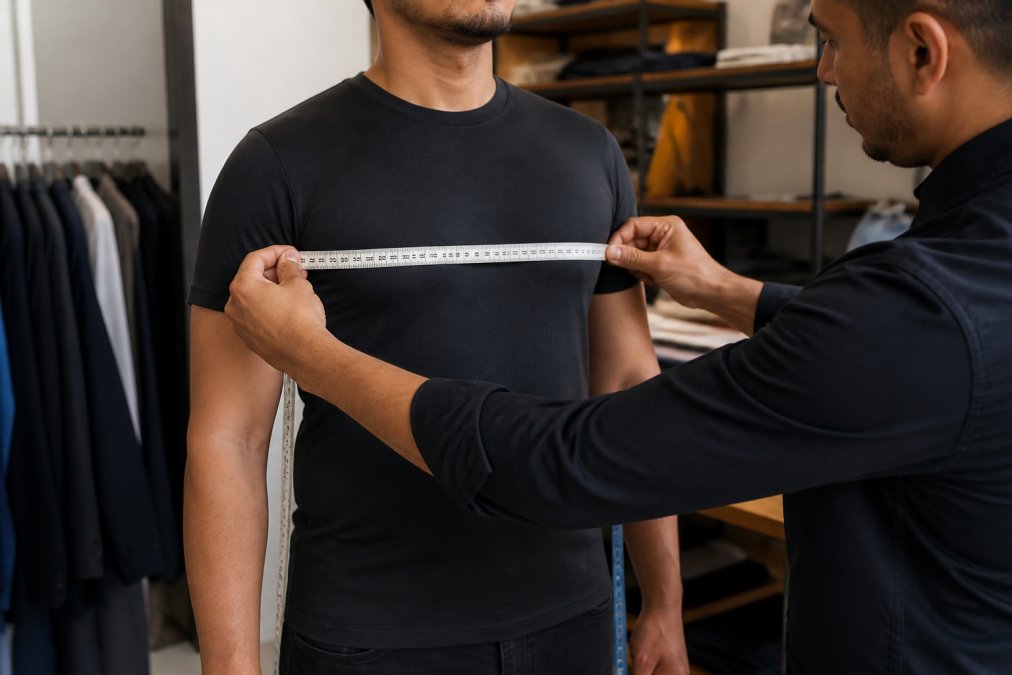
Wrap the measuring tape around the fullest part of your chest. This is typically at nipple level. The tape should sit horizontally and parallel to the ground.
-
Keep the tape snug but not tight. You should be able to fit one finger under the tape comfortably.
-
Take the measurement at the end of a normal breath. Don't puff your chest out or suck it in.
-
Write down your measurement in inches. Round to the nearest half-inch if needed.
Use a soft fabric tape measure (the kind tailors use) for accurate readings. A rigid ruler or metal tape won't conform to your body's curves.
Converting Chest Measurements to Sizes
Once you have your chest measurement, match it to a size using this general guideline:
| Chest Measurement | Typical Size |
|---|---|
| 34-36 inches | Small (S) |
| 37-40 inches | Medium (M) |
| 41-43 inches | Large (L) |
| 44-46 inches | X-Large (XL) |
| 47-50 inches | 2X-Large (2XL) |
| 51-54 inches | 3X-Large (3XL) |
However, this is a starting point, not a guarantee. Different brands cut their shirts differently. One brand's Medium might fit like another brand's Small. Always check the specific brand's size chart before ordering.
When you're between sizes, consider the fit type and fabric. If you're 40 inches and between Medium and Large, a Medium in a relaxed fit might work better than a Large in a slim fit.
Measuring Sleeve Length and Neck Circumference
Sleeve length and neck measurement are critical, especially for dress shirts. Get these wrong, and even a perfect chest fit won't save the shirt.
Getting Your Sleeve Length Right
Sleeve length determines where your cuff sits on your wrist. Too short, and you look like you're wearing a kid's shirt. Too long, and the fabric bunches at your wrists.
To measure sleeve length:
-
Bend your arm at a 90-degree angle.
-
Measure from the center back of your neck, across your shoulder, down your arm to your wrist. Start at the base of your neck where it meets your shoulders, run the tape across the top of your shoulder, down the outside of your arm, and stop at your wrist bone.
-
Keep the tape relaxed. Don't stretch it tight.
-
Record the measurement. Sleeve lengths typically range from 31 to 37 inches for adults.
The shoulder seam is your visual guide for fit. When a shirt fits properly, the shoulder seam should sit right at the edge of your shoulder bone, not hanging down your arm or pulling up toward your neck.
For t-shirts, sleeve length is less critical because t-shirt sleeves are typically shorter and more forgiving. For dress shirts, precision matters because the sleeve hits your wrist, and even a half-inch difference is noticeable.
Finding Your Neck Measurement
Neck circumference matters primarily for dress shirts and button-ups.
To measure your neck:
-
Measure around the base of your neck where it meets your shoulders, not higher up near your jaw.
-
Keep the tape relaxed. You should be able to fit one finger under the tape comfortably.
-
Record the measurement in inches. Most neck sizes range from 14 to 18 inches for adults.
Dress shirt sizes are often listed as neck measurement plus sleeve length (for example, 16/34 means a 16-inch neck with 34-inch sleeves). T-shirt sizing relies on chest circumference instead.
How Should a T-Shirt Fit on Your Body
T-shirt fit is different from dress shirt fit. T-shirts are more casual and forgiving, but there's still a right way to wear them.
Shoulder Seam and Armpit Placement
The shoulder seam is the most important fit indicator for t-shirts. When you put on a shirt, the seam where the sleeve attaches to the body should sit right at the edge of your shoulder joint. If the shoulder seam is too far down your arm, the shirt is too big. If it's riding up toward your neck, the shirt is too small.
Armpit placement follows from shoulder seam alignment. The armpit hole should sit comfortably in your actual armpit, not down your side or up under your arm. Most t-shirts have an armpit-to-armpit measurement that's 1-2 inches larger than your actual chest measurement, giving you room to move and breathe.
Sleeve Length and Cuff Fit
T-shirt sleeves should hit somewhere between your shoulder and elbow. The sleeve cuff should feel comfortable against your arm without pulling or bunching. If the fabric gathers at your bicep, the sleeves are too wide. If they're tight around your arm, they're too narrow.
Length varies by fit type. A slim-fit t-shirt typically has shorter, narrower sleeves. A relaxed-fit t-shirt has longer, wider sleeves.
Difference Between Unisex and Fitted Sizing
Unisex and fitted aren't just about how tight the shirt is, they're different cut patterns altogether.
Unisex sizing is cut to fit a wider range of body types. The shirt is typically straighter through the torso, with less tapering at the waist. The sleeves are usually wider, and the overall silhouette is more rectangular.
Fitted sizing is tailored to follow body curves more closely. For women's fits, there's typically more taper at the waist and shaping through the torso. The sleeves are often narrower, and the overall fit is more contoured.
A unisex Medium and a fitted Medium from the same brand are not the same shirt. The unisex version will be looser through the torso and wider in the sleeves. At Respect My Tshirt, we offer both options because different customers want different things.
Dress Shirt vs. T-Shirt Sizing: What You Need to Know
Dress shirts and t-shirts are sized completely differently.
Dress shirts use neck measurement and sleeve length as their sizing system. A 16/34 shirt has a 16-inch neck and 34-inch sleeves. The chest measurement isn't explicitly stated because dress shirts are cut to fit a range of chest sizes based on neck and sleeve length.
T-shirts use chest measurement as the primary sizing metric. A Medium t-shirt is sized for a specific chest circumference range (typically 37-40 inches). Sleeve length and neck size are secondary considerations.
This means your dress shirt size and t-shirt size won't match. You might wear a 15.5 neck dress shirt but a Large t-shirt. This is completely normal and reflects different sizing systems.
When shopping for dress shirts, pay close attention to the neck and sleeve measurements on the size chart. When shopping for t-shirts, focus on chest measurement and compare the armpit-to-armpit width to your actual measurements.
Understanding Fit Types: Slim, Regular, and Relaxed
Beyond unisex and fitted, brands use fit descriptors like slim, regular, and relaxed.
Slim fit is the most tapered option. The shirt follows your body closely through the chest, waist, and hips. The sleeves are typically narrower. Slim fit works well if you have a lean frame or prefer a modern, tailored look.
Regular fit is the middle ground. It has some shaping but more room than slim fit. Regular fit works for most body types and is the most versatile option.
Relaxed fit is the loosest option. The shirt has minimal shaping, with a straighter cut through the torso and wider sleeves. Relaxed fit is comfortable for layering or for anyone who values comfort over a fitted look.
The fit type changes how you should size. If you're between two sizes and choosing slim fit, size up. If you're choosing relaxed fit, you might size down. Regular fit is usually the safest bet if you're unsure.
Fabric Shrinkage and Size Adjustments
Here's what most size guides don't tell you: fabric shrinks. The size that fits perfectly fresh out of the box might be noticeably smaller after a few washes.
Cotton shrinks the most. Pure cotton can shrink 3-5% in length and width, especially if you wash in hot water and dry on high heat (peer-reviewed research).
Cotton-blend fabrics shrink less. A 50/50 cotton-poly blend shrinks maybe 1-2% (peer-reviewed research).
Performance fabrics and synthetics resist shrinkage. Polyester and nylon shrink very little, sometimes less than 1% (peer-reviewed research).
To minimize shrinkage, wash in cold water, air dry or use low heat, and remove the shirt from the dryer while still slightly damp.
If you know a shirt will shrink and you want it to stay true to size, order a size up. If you prefer a snug fit and don't mind the shirt shrinking into that fit, order your normal size. At Respect My Tshirt, our product descriptions include fabric content so you know what to expect.
Choosing the right shirt size comes down to three things: knowing your actual measurements, understanding how different brands cut their shirts, and accounting for variables like fabric shrinkage. Start by measuring your chest, sleeve length, and neck. Check the specific brand's size chart instead of assuming sizes are universal. Consider the fit type and fabric content. Don't hesitate to reach out to customer support, brands like Respect My Tshirt want you to get the right size because a perfect fit means you'll actually wear the shirt.
Getting this right transforms your shopping experience. No more returns. No more frustration. Just shirts that fit the way they should.
Frequently Asked Questions
How do I determine my shirt size at home?
Measure your chest at the fullest part while wearing a fitted shirt. Wrap a measuring tape snugly around your body under your arms, keeping it parallel to the ground. Add your neck and sleeve measurements too. Compare these three measurements to a size chart. Most brands size based on chest circumference first, then adjust for sleeve length and neck measurement. Write down all three numbers and reference them against the brand's specific sizing guide.
Should I size up or down if I'm between shirt sizes?
It depends on your fit preference and the garment type. If you prefer a closer, tailored fit, size down. For a relaxed, comfortable fit, size up. Consider the fabric too, cotton tees may shrink slightly, so sizing up slightly can account for that. Check the brand's fit guide and customer reviews to see how their garments run. Many people find that going up one size gives better comfort without looking oversized, especially in premium apparel.
What's the difference between unisex and fitted sizing?
Unisex sizing follows a straight, boxy cut that fits all body types similarly, with consistent width from chest to hem. Fitted sizing tapers at the waist and torso, hugging your body contours more closely. Unisex shirts work well for oversized or relaxed aesthetics, while fitted versions offer a more tailored appearance. Women often prefer fitted cuts for a more flattering silhouette, while unisex cuts suit those wanting a looser, gender-neutral look. Check the product description to see which cut the brand offers.
How do I know if a shirt will fit my body shape?
Look for fit guides and customer photos in different sizes. Most quality brands show how their apparel fits across various body types. Pay attention to reviews mentioning your body shape, if someone with similar proportions says the shirt fits well, it likely will for you. Consider the garment's torso length and whether it's designed for your frame. Extended sizes (2X and up) should have proportional adjustments to sleeve length and torso, not just scaled-up versions of smaller sizes.
Will my shirt shrink after washing?
Most cotton and cotton-blend apparel shrinks 3-5% after the first wash if not properly cared for. To minimize shrinkage, wash in cold water and air-dry or use low heat. Some premium brands pre-shrink their fabrics to reduce this effect. Check the care label and product description for shrinkage information. If a brand mentions pre-shrunk fabric, you can trust the size chart as-is. When in doubt, size up slightly if you're between sizes and the fabric is 100% cotton.
How should a t-shirt fit on the shoulders?
The shoulder seam should sit right at the edge of your shoulder, not drooping down your arm or riding up your neck. When you raise your arm, the seam should stay in place without pulling. The armpit should sit snugly but not tight, you should fit one finger comfortably under the fabric. If the shoulder seam falls more than an inch below your actual shoulder point, the shirt is too large. Proper shoulder fit is crucial for comfort and appearance, so always check this measurement against the brand's garment dimensions.
What's the difference between dress shirt and t-shirt sizing?
Dress shirts use neck and sleeve measurements (e.g., 16/34), while t-shirts use chest circumference and fit type (S, M, L, XL). Dress shirts are more tailored with structured cuts, while t-shirts are typically more relaxed. A dress shirt's collar size and cuff measurement are critical, whereas t-shirt fit depends on chest width and torso length. T-shirts also come in unisex, fitted, and relaxed versions. Never assume your dress shirt size translates to t-shirt sizing, always measure and check the specific size chart for each garment type.
How do I choose between slim, regular, and relaxed fit?
Slim fit hugs your body closely with a tapered torso and narrower sleeves, ideal for a modern, tailored look. Regular fit offers a straight cut through the chest and torso with standard sleeve width, working well for most body types. Relaxed fit is looser throughout, with a wider cut and more room in the torso and sleeves, perfect for comfort and oversized aesthetics. Your choice depends on body shape, personal style, and comfort preference. Try on or read reviews in each fit to see which flatters your frame best.
This article was written using GrandRanker